Introduction — a small shop story that matters
I once stood in a cramped makerspace watching a friend cut plywood for hours and cough through most of the day. The smell hung heavy; the laser cutter spit thin wisps of smoke. In that moment I realized how many workshops treat air cleanup as an afterthought. A good laser cutter fume extractor can change the whole experience, yet many of us still settle for noisy fans or half-measures.
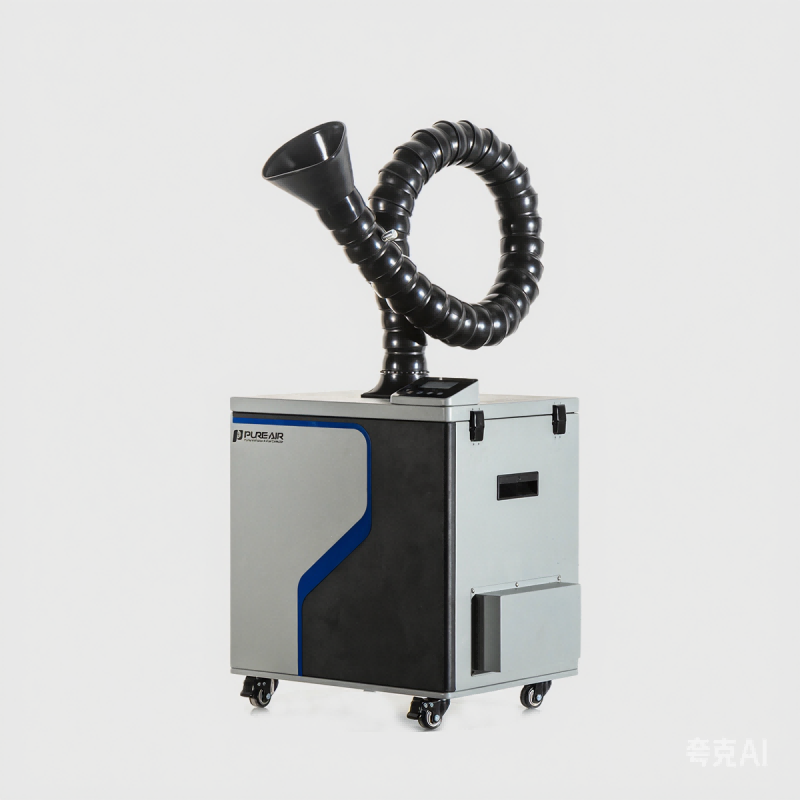
Consider this: shops that ignore particulate control often see higher absenteeism, faster wear on optics, and complaints from neighbors (and yes, from staff). Data I’ve read shows fine particulate — think PM2.5 — moves fast and invisibly. So here’s my question: how do you pick a system that really works for small to mid-size shops without wasting money? Let’s walk through a calm, practical look at what matters — and why you’ll sleep better knowing the air is cleaner. — a small promise before we dig in.
Part 2 — Where common solutions fail (technical lens)
fume extraction system for laser cutting is often sold as a fix-all. In reality, many traditional setups miss the mark because they treat extraction as a single-box problem. I want to be direct: fans alone don’t solve filtration needs. The real issues hide in mismatched airflow, poor filtration choices, and ignored maintenance cycles. When you combine a weak centrifugal fan with a low-grade filter, you get short-term smoke removal but long-term build-up on lenses and inside enclosures. That build-up reduces cut quality and raises operating costs — not what anyone wants.
Let me get technical for a moment: effective systems balance airflow rate, filter media, and capture hood design. HEPA filters handle fine particulates. Activated carbon helps with VOCs and odor. But if the capture hood is wrong, you’ll never draw the plume into the filter. Look, it’s simpler than you think: match capture velocity to material and cut speed, and the rest follows. Also, power converters and electrical control matter; poorly matched electronics can cause fans to run inefficiently or fail early. — funny how that works, right?
So what’s the root cause?
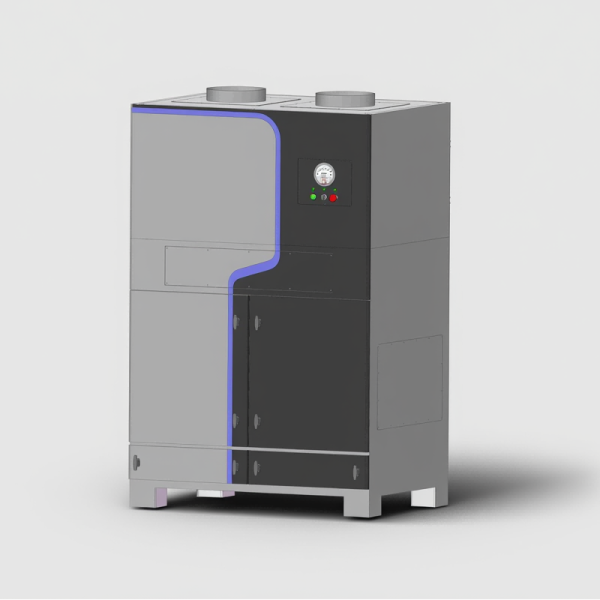
Most failures come from one of three places: wrong filter type, poor hood placement, or underpowered suction. Each looks small until it costs you hours and parts. I’ve seen shops buy an expensive filter and still fail because the airflow was wrong. That’s why a systems view matters.
Part 3 — New principles and practical checks for the future
Now let’s look forward. I believe the best choices come from blending simple engineering with real-world testing. Modern designs for a fume extraction system for laser cutting focus on modular filtration stacks, smarter control electronics, and tuned hoods. The principle is straightforward: capture at the source, filter to the right grade, and control with sensors. Sensors can monitor PM2.5, airflow, and filter differential pressure. When the system tells you it’s time to change a filter, you change it — not on a guess. This reduces downtime and prevents damage to optics. I’m optimistic about these shifts because they center on measurable outcomes.
What’s next? Think integrated monitoring, quiet variable-speed fans, and easier filter swaps. In practice, that means you get better cut quality and fewer surprises. To help you decide, here are three evaluation metrics I use when testing systems: 1) Capture efficiency at the source (measured in CFM at hood), 2) Filter grade and service life (HEPA rating plus carbon grams), and 3) System control and monitoring (sensors, alarms, and ease of replacement). Use those metrics. They cut through marketing noise and show real value.
Final thought
I’ll finish with plain talk: choosing the right extractor is part engineering, part habit. Measure, match, and maintain. That’s where real benefits come from — quieter shops, cleaner air, longer equipment life. If you want a reliable partner in that process, check out PURE-AIR: PURE-AIR. We’ve learned a lot from hands-on testing, and I hope these pointers help you pick a solution that actually works for your workshop.